
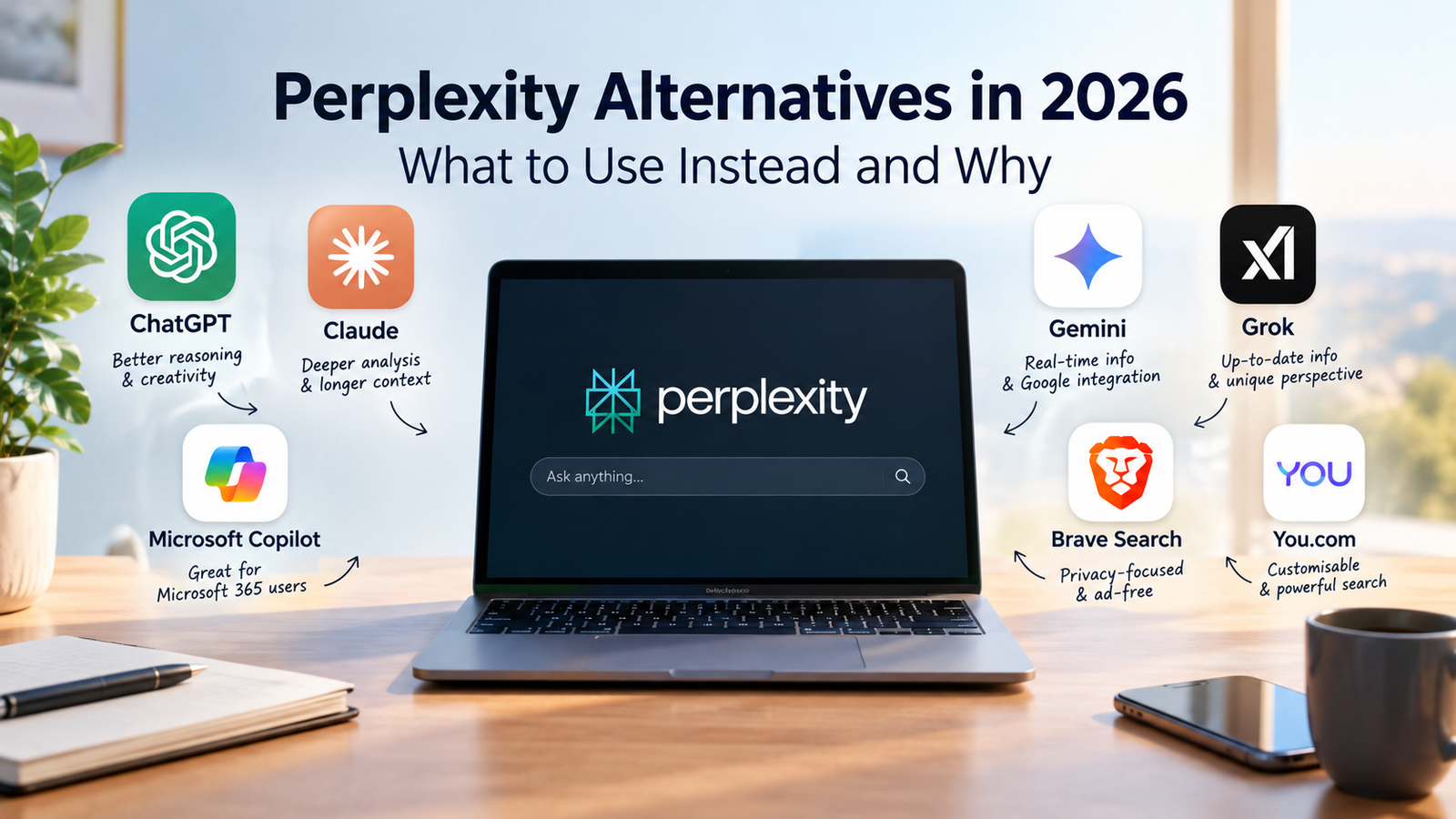
Readers look past Perplexity when seeking alternatives because of reliability concerns regarding real-time, web-wide research and Q&A capabilities. The strongest replacement depends entirely on your specific research workflow and whether you need direct web-wide Q&A or structured database queries.
Why people look past it
Power your products with unparalleled real-time, web-wide research and Q&A capabilities.
Our read: When managing high-volume research tasks, relying on a single tool for web-wide Q&A can create bottlenecks in your daily operations. Take time to audit your current search bottlenecks before moving away from Perplexity. Document the exact queries where current output fails to meet your speed or accuracy requirements. If your team relies on external API integrations, map out every endpoint currently tied to your search infrastructure. Check whether your current workflow demands live web crawling or if static knowledge bases suffice for your projects. Keep in mind that higher tier enterprise offerings from competitors are usually meant for large organizations rather than individual users seeking a simple search replacement.
- Export your historical search queries and categorize them by complexity.
- Document every instance where real-time web retrieval failed to deliver usable results.
- Review your technical dependencies to see how deeply integrated your current research tools are.
- Desire for alternative interfaces to handle real-time queries.
- Shifting requirements away from standard web-wide research tools.
- Need for distinct Q&A frameworks that handle complex searches differently.
How these alternatives were chosen
Every alternative listed here was selected based on verified public information regarding their research and Q&A functions. Do not rely on marketing claims when testing these platforms. Instead, run a standard set of ten complex queries across each candidate to measure response accuracy and speed. Look closely at how each platform handles citations and source attribution during live web searches. A common mistake is choosing an alternative solely based on brand recognition rather than testing its ability to process multi-step research prompts. Compare the response latency during peak hours to ensure the tool keeps up with your daily workflow demands. Avoid team or enterprise tiers if you are working alone, as those plans add administrative overhead and costs that offer no benefit to a single user.
- Compile a test suite of ten distinct research questions requiring real-time data.
- Run the test suite across potential alternatives to measure answer quality.
- Evaluate source citation transparency for every candidate platform.
- Selection based on verified public information.
- Direct evaluation of real-time web-wide research features.
- Comparison of core Q&A capabilities across available tools.
The alternatives
Evaluating alternatives requires looking strictly at how well each platform handles web-wide research and structured Q&A tasks. Since Perplexity focuses on real-time information retrieval, your replacement should match that speed without sacrificing citation quality. Test alternative search interfaces by inputting prompts that require up-to-the-minute factual verification. Watch out for tools that hallucinate sources or fail to pull from live web pages when given recent temporal constraints. Make sure you test each option using the exact type of queries you run most frequently during your workday. If you manage a large organization, team or enterprise tiers might eventually make sense, but individual users should stick to single-user plans that avoid unnecessary administrative complexity.
- Test live URL retrieval on each alternative platform using current news events.
- Check citation links to ensure the referenced web pages actually exist and contain the cited information.
- Compare the formatting of generated research summaries against your personal readability preferences.
- Examine tools focused on real-time web-wide research.
- Assess alternative Q&A platforms available on the market.
- Review systems built for open-ended information retrieval.
Which alternative fits which reader
Choosing the right alternative comes down to matching your primary tasks with the strengths of the platform. If your daily work involves heavy academic literature review, look for tools prioritizing structured document parsing over live web chat. If you spend your day tracking fast-moving news, prioritize options with robust real-time web crawling capabilities. A frequent mistake is adopting a complex research suite when a simple Q&A interface is all you actually need. Match your daily query volume against the strengths of each candidate to avoid paying for features you will never use. Remember that business and education tiers are designed for multi-user coordination and are rarely necessary for independent operators.
- List your top three daily research tasks and rank them by time spent.
- Filter potential alternatives to only those supporting your highest-ranked task.
- Select the simplest tool that meets your baseline real-time research requirements.
- Match tools to your specific research frequency.
- Align platform features with your need for real-time data.
- Select options based on your daily Q&A volume.
Verdict
Moving away from Perplexity means finding a tool that matches your specific tolerance for research latency and citation accuracy. Test your top choice thoroughly using real-world queries before committing to any long-term financial subscription. Avoid over-complicating your setup with multi-user tiers if you are the only person using the software. Focus purely on how well the alternative handles real-time, web-wide research and Q&A tasks. Implement your chosen tool gradually by running parallel searches alongside your old workflow for one week to verify consistency. Pick the option that minimizes your search friction and provides verifiable sources every time.
- Run parallel searches on your old and new tools for one week to compare results.
- Cancel your previous subscription only after confirming the alternative handles your peak workload.
- Document your new research workflow for future reference.
- Select your replacement based on verified research performance.
- Prioritize tools with reliable real-time web access.
- Avoid paying for enterprise features if you work alone.
How we verified this
Evidence level: Editorial comparison of verified public information. TNTReview did not test this product directly. Every factual claim above comes from the official sources listed here.
- Perplexity official site, checked 2026-09-14 (1 fact on this page)
What we could not confirm: the official pages we checked did not state the full plan list, the current price, the exact free usage allowance. Rather than estimate, we left it out of this article.
Last verified: 2026-09-25